
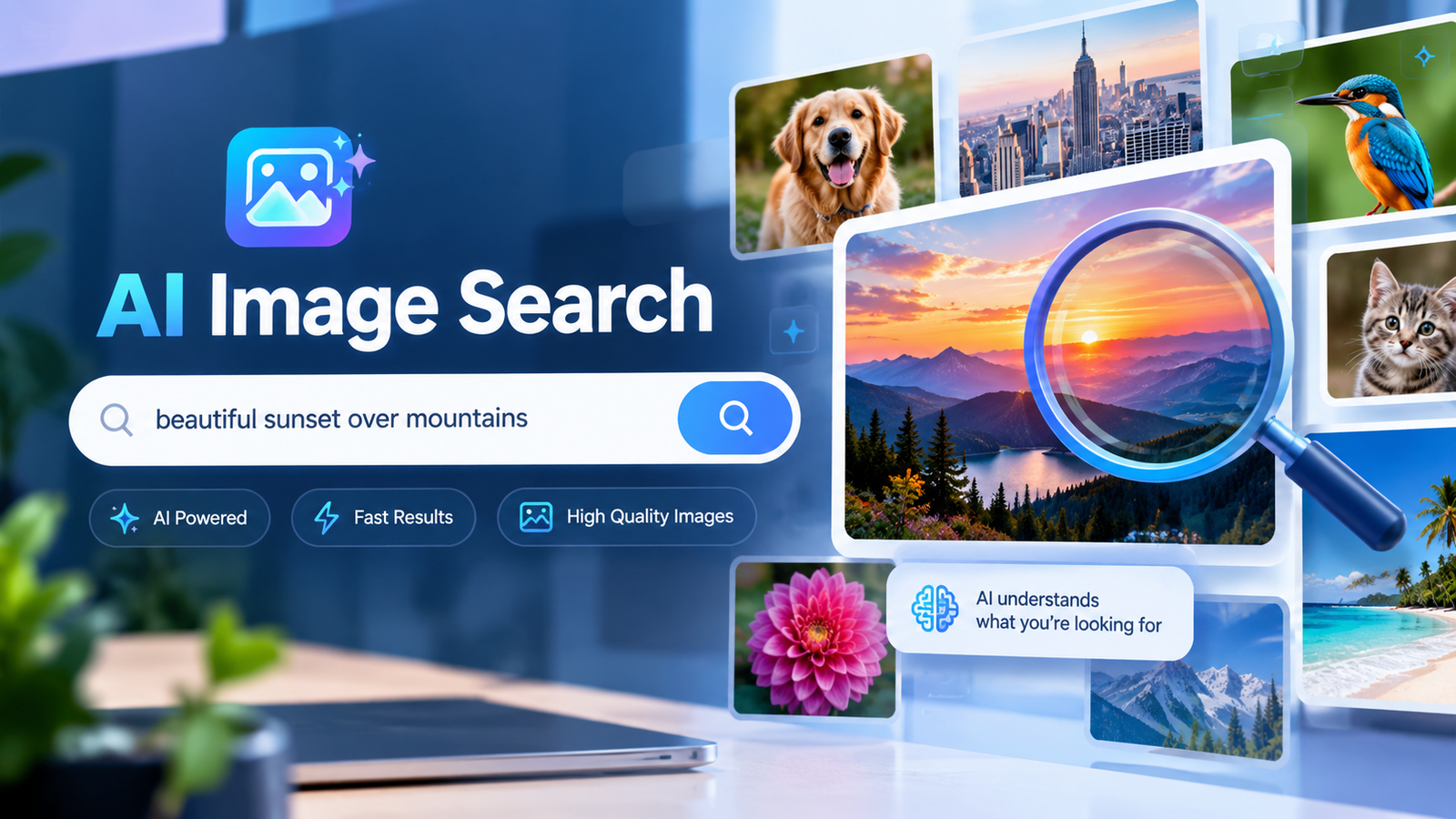
If you have ever seen a product, place, object, or photo online and wondered what it is, you no longer need to describe it with a long text query. AI image search lets you use a picture as the starting point for finding information, similar visuals, products, sources, and more. Instead of relying only on keywords, modern visual search systems can analyze what appears inside an image and connect those visual signals with relevant search results.
The technology is useful for everyday searches as well as professional work. You can use AI image search online free to identify an unfamiliar object, find similar clothing, discover a product from a photograph, check where an image has appeared, or get inspiration for a design project. However, not every visual search tool works in the same way, so choosing the right option depends on what you want to find.
In this guide, you’ll learn how AI-powered image search works, how it differs from reverse image search, which tools are useful for different situations, and how to get more accurate results.
What Is AI Image Search?
AI image search is a search technology that allows you to use an image, rather than only words, to find relevant information. The system uses artificial intelligence and computer vision to examine visual characteristics such as objects, shapes, colors, patterns, text, and other contextual signals.
For example, imagine you photograph a chair at a furniture store but cannot find its name. Instead of searching for “modern wooden chair with curved back and beige cushion,” you can upload the photograph. An AI-powered visual search system may recognize the chair and return similar products, related pages, or additional information.
This makes AI image search especially useful when you do not know the exact words needed to describe something.
How Does AI Image Search Work?
At a basic level, the process is fairly simple. You upload or select an image, the AI analyzes its visual content, and the search system retrieves results that appear relevant.
Computer Vision
Computer vision allows AI systems to interpret visual information. It can detect objects, recognize patterns, read text within an image, and identify characteristics that might be difficult to describe manually.
For example, a photograph might contain a pair of sneakers, a backpack, and a watch. A modern visual search system may recognize these individual elements instead of treating the photograph as one undifferentiated picture.
Visual and Semantic Similarity
AI can compare images based on their visual characteristics and meaning. This means a search does not always need to find an exact copy of your image.
If you upload a photograph of a particular lamp, the system may return lamps with a similar shape, color, design, or overall appearance even when the exact photograph does not exist online.
Multimodal Search
The latest generation of visual search increasingly combines images with text. You might upload a picture and then ask a question such as, “Where can I buy something similar?” or “What type of plant is this?”
This combination of visual information and natural-language questions makes AI image search online more flexible than traditional keyword-only search.
AI Image Search vs. Reverse Image Search
Although the terms are sometimes used interchangeably, AI image search and reverse image search can have different purposes.
| Feature | AI Image Search | Reverse Image Search |
| Main input | Image, image + text | Image |
| Find similar visuals | Yes | Yes |
| Identify objects | Yes | Varies |
| Find exact copies | Sometimes | Strong use case |
| Product discovery | Strong | Moderate to strong |
| Find image sources | Possible | Strong use case |
| Ask questions about an image | Often available | Usually limited |
| Visual understanding | Advanced | Depends on the service |
| If your goal is to understand what is shown in a picture, an AI visual search tool can be useful. If you want to find copies of an existing photograph or investigate where it has been published, a reverse image search tool may be a better choice. |
What Can You Search With an Image?
The usefulness of AI image search extends far beyond finding duplicate photographs.
Find Products
Upload an image of shoes, clothing, furniture, electronics, or accessories to discover similar products. This can be particularly helpful when you see an item in a social media post but do not know its name.
Identify Objects
AI can help identify unfamiliar objects, tools, plants, animals, landmarks, and other visual subjects. Results should still be verified when accuracy matters.
Find Similar Images
Designers and content creators can use visual search to find images with similar compositions, colors, styles, or subjects.
Find an Image Source
Reverse-search functionality can help locate webpages where an image or similar version appears. This is useful for research, attribution, and image verification.
Search Text Inside Images
Some visual search systems can recognize text in photographs, screenshots, signs, menus, documents, or product packaging. You can then use the recognized information for a conventional search.
Search Multiple Objects
A photograph does not always contain just one searchable subject. For example, an outfit photograph might contain a jacket, shoes, sunglasses, and a handbag. Modern visual search can increasingly analyze multiple elements and help you search them individually.
Best AI Image Search Tools
There is no single tool that is perfect for every visual search task. Some are better for general discovery, while others specialize in source tracking, shopping, inspiration, or personal photo organization.
Google Lens
Google Lens is one of the most recognizable options for visual search. It can help identify objects, discover similar images, recognize text, search products, and explore places.
It is particularly useful when you want a general-purpose AI image search Google experience without learning a complicated workflow.
For example, you could take a picture of a pair of shoes and use Lens to identify the style and find visually similar products.
TinEye
TinEye is particularly useful when your objective is reverse image searching. It can help you investigate where an image appears online and discover matching or modified versions.
This makes it useful for photographers, publishers, marketers, and anyone researching image usage.
Bing Visual Search
Bing Visual Search provides another way to search using images. It can be useful for discovering visually related content, identifying objects, and exploring products.
It is worth trying when another search engine does not produce useful results because different indexes can return different matches.
Pinterest Lens
Pinterest’s visual discovery features are particularly useful for inspiration. Fashion, interior design, hairstyles, crafts, and visual trends are areas where image-based discovery can be more useful than a conventional text search.
For example, a photograph of a living room can lead to visually related décor ideas and design inspiration.
Best AI Image Search Tool by Use Case
Your best option depends on what you are trying to accomplish.
| Goal | Best Tool Type | Why It Helps |
| Identify an object | AI visual search | Understands image content |
| Find similar products | Visual shopping search | Connects images with products |
| Find an image source | Reverse image search | Searches for matching appearances |
| Design inspiration | Visual discovery | Finds related styles |
| Search personal photos | AI photo search | Uses visual categories and recognition |
| Research an unfamiliar subject | Multimodal AI search | Combines image and text questions |
| If you are simply looking for AI image search free options, start with services that provide visual searching without requiring a paid subscription. Free availability and feature limits can change, so always check the provider’s current terms before relying on a particular feature. |
How to Use AI Image Search Step by Step
Using an AI image search app or website usually takes only a few steps.
Step 1: Choose Your Search Tool
First, decide what you need. Use a general visual search engine for object identification or shopping, and choose a reverse image service when finding an image’s source is your priority.
Step 2: Upload Your Image
Select an existing photograph, screenshot, or image from your device. Some services also allow you to paste an image URL or search directly from an image on a webpage.
Step 3: Crop the Important Area
If the image contains several objects, crop it around the item you actually want to identify. Removing unnecessary background elements can make the search more focused.
Step 4: Add Text When Possible
A useful feature in modern visual search is combining an image with a question. Instead of simply uploading a picture, try asking something specific, such as “Find similar black leather bags.”
Step 5: Compare the Results
Do not automatically choose the first result. Look at several matches and compare their appearance, descriptions, sources, and other available information.
Step 6: Verify Important Information
Visual similarity does not always mean that two products are identical. If you are purchasing something or using information for professional research, confirm the result using reliable sources.
How to Get Better Results From AI Image Search
A few simple changes can make AI image search online considerably more useful.
Use the clearest image available. Blurry photographs, extreme compression, poor lighting, and very small subjects can make recognition harder.
Crop the image when the background contains distracting objects. A close-up of a shoe will usually provide a more focused search than a full photograph of a person wearing the shoe.
You can also try several searches with slightly different crops. If one search identifies the wrong object, isolate another part of the image and search again.
For difficult searches, combine the image with descriptive text. Instead of asking an AI to identify everything in a busy photograph, tell it what you want to investigate.
AI Image Search for Shopping
Visual shopping is one of the most practical applications of AI-powered search. You may see a product online without knowing its brand, model, or exact name. An image can provide enough information to begin the discovery process.
For example, upload a photograph of a pair of sneakers. The system may identify visual characteristics and return similar footwear. You can then compare product pages, prices, specifications, and retailers.
This workflow is especially useful for fashion, furniture, home décor, accessories, and consumer electronics.
However, always verify the product model before purchasing. Two visually similar products can have completely different materials, specifications, prices, or quality.
AI Image Search for Designers and Creators
Designers, photographers, marketers, and content creators can use visual search as a research tool.
You can search for similar compositions, explore color combinations, discover visual references, investigate an unfamiliar design style, or organize large photo collections.
For example, a designer working on a website might find a particular color palette inspiring. Instead of searching for the exact color names, they can use a reference image and explore visually related examples.
This can speed up the research stage without replacing human creative judgment.
AI Image Search for SEO and Websites
Image search is also important for website owners. Search engines need to understand images in context, so publishing a beautiful image alone is not enough.
Use descriptive filenames rather than meaningless strings. Add accurate alt text that explains the image when appropriate, and place images on pages with relevant surrounding content.
For ecommerce websites, accurate product information and structured data can provide additional context. Image quality, page performance, mobile usability, and crawlability also remain important parts of image SEO.
The goal is not to manipulate AI systems with excessive keywords. Instead, make the image and its surrounding webpage genuinely useful and understandable.
Privacy and Safety Considerations
Before uploading a photograph to an online visual search service, consider what the image contains.
Avoid uploading confidential documents, private photographs, financial information, passwords, or other sensitive material unless you fully understand how the service handles uploaded content.
Privacy practices vary between providers. Check the current privacy policy and terms of the tool you plan to use, particularly when working with personal or professional images.
Limitations of AI Image Search
AI visual search is powerful, but it is not infallible.
Results can be affected by poor image quality, unusual angles, hidden objects, limited indexing, visually similar products, or insufficient information.
Different search engines can also return different results because they rely on different databases, algorithms, and ranking systems.
Most importantly, a visually similar result is not automatically proof that an object is the exact same product or that an image came from a particular source. Treat AI results as a starting point and verify important claims.
AI Image Search vs Traditional Image Search
Traditional image search usually begins with words. You type a phrase and receive images related to those keywords.
AI-powered visual search changes the starting point. Instead of explaining what you are looking for, you can show the search engine what you have.
That is particularly useful when you do not know the correct terminology. A photograph can communicate shape, color, texture, object type, and visual context in ways that a short text query may not.
Real-World Examples of AI Image Search
Consider a few everyday scenarios.
Example 1: Unknown Product: You photograph a lamp in a café and want something similar for your home. Visual search can help discover related designs.
Example 2: Fashion Discovery: You see an outfit online and want similar clothing. Crop the jacket or shoes and perform separate searches.
Example 3: Image Verification: You receive an unfamiliar photograph and want to investigate where it appears online. Reverse image search can help locate matching or related versions.
Example 4: Design Research: You find an interesting room design and want similar ideas. Visual discovery tools can provide additional references.
Example 5: Object Identification: You photograph an unfamiliar tool and use AI to identify possible names before researching its purpose.
How to Verify AI Image Search Results
Verification is one of the most important steps people overlook.
Start by opening the source behind a result instead of relying solely on the preview. Compare information across more than one reliable source when the answer matters.
For products, check the manufacturer’s specifications. For historical or news-related images, investigate the original context and publication date. For copyright questions, identify the earliest credible source you can find rather than assuming the first result is the owner.
AI makes discovery faster, but human judgment remains essential.
Conclusion
AI image search has changed the way people discover information online. Instead of finding the right words first, you can start with a photograph and let AI interpret the visual content.
Whether you want to identify an object, find similar products, research an image source, discover design inspiration, or search your own photo collection, the right visual search tool can save significant time.
For the best results, use clear images, crop unnecessary elements, add descriptive questions when available, compare multiple results, and verify important information. Used this way, AI image search becomes more than a convenient feature—it becomes a practical research and discovery tool.
Frequently Asked Questions
What is AI image search?
AI image search allows you to search or understand visual content using artificial intelligence. Depending on the tool, you can identify objects, find similar images, discover products, locate sources, or combine an image with a text question.
Is there a free AI image search tool?
Yes. Several visual search services offer free features. However, capabilities, usage limits, and pricing can change, so check the current terms of each service.
Can I search Google using a picture?
Yes. Google Lens allows users to search using an image and can provide information about objects, similar images, products, text, and other visual content.
What is the difference between AI image search and reverse image search?
AI image search generally focuses on understanding visual content and finding related information, while reverse image search is commonly used to locate exact or similar versions of an existing image and investigate its online sources.
Can AI identify an object from a photo?
Yes, AI-powered visual search can identify or suggest possible identities for many objects. Accuracy depends on image quality, the subject, and the information available to the search system.
Can AI find similar images?
Yes. Visual similarity is one of the main uses of AI-powered image search. Results can be based on characteristics such as appearance, composition, objects, colors, and overall visual meaning.
Is AI image search accurate?
It can be highly useful, but it is not guaranteed to be correct. Always verify important information using reliable sources, especially for purchases, professional research, copyright decisions, or factual claims.
You May Also Read: Barry Keoghan
