
The rise of AI-powered content creation has changed how creators, marketers, educators, and businesses approach video production. Instead of spending hours recording footage and editing every scene manually, users can now turn ideas, scripts, images, and prompts into polished videos with modern AI platforms.
Choosing the right Best AI Video Maker, however, is not simply about picking the tool with the most features. A useful platform needs to match your goals. A YouTube creator may need script assistance and long-form editing, while a marketer may prioritize product visuals, captions, voiceovers, and fast exports. Beginners often want a simple interface, whereas experienced creators may care more about creative control and output consistency.
This guide explores what makes a Best AI Video Maker valuable, how different platforms fit different workflows, and what you should check before paying for a subscription. It also explains free options, practical use cases, common limitations, and ways to improve AI-generated video results.
What Makes an AI Video Tool Stand Out?
A strong Best AI Video Maker should simplify more than one step of production. Ideally, it can help with ideation, scripts, visuals, narration, editing, captions, and exporting.
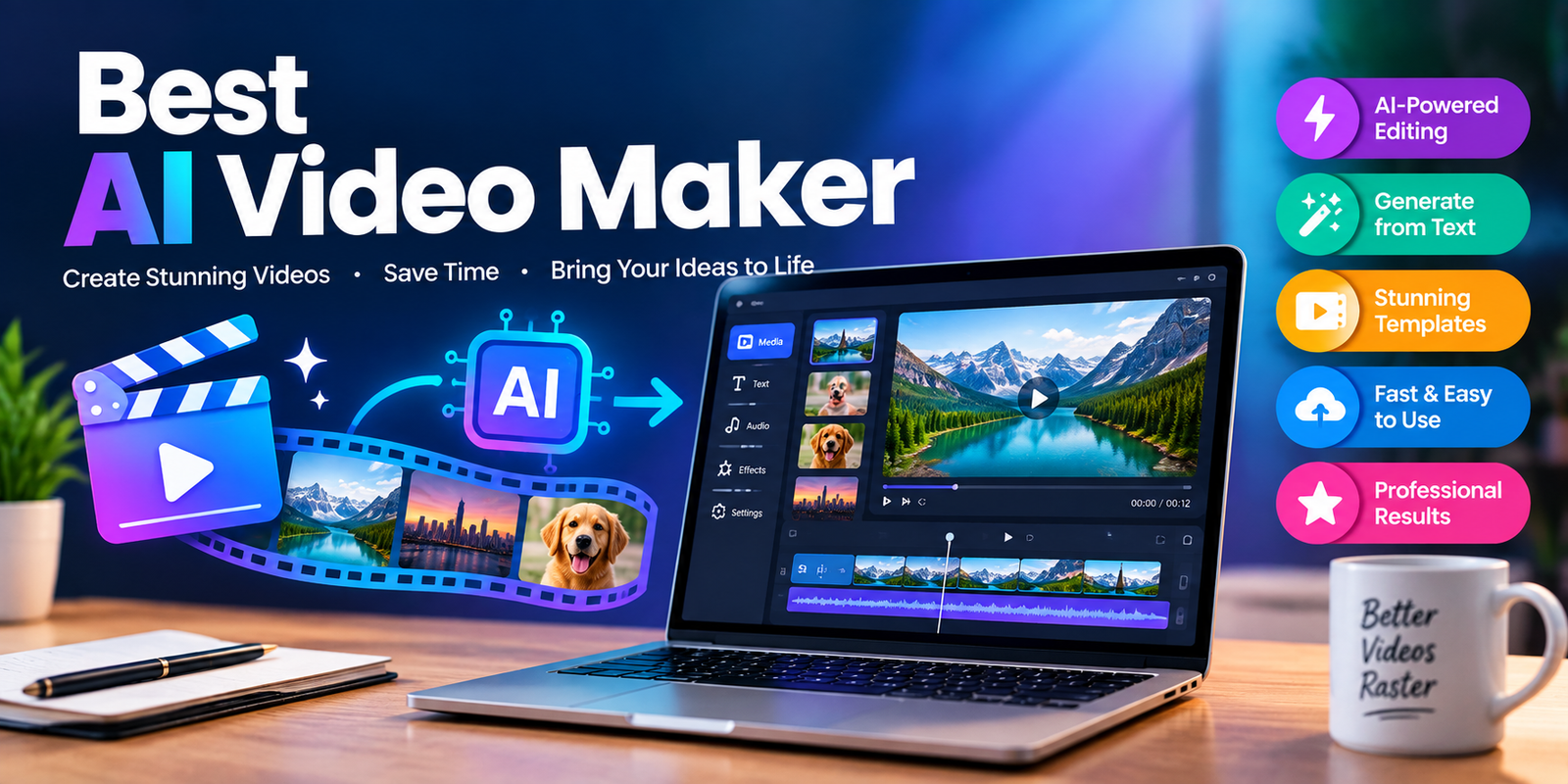
The most useful features include text-to-video generation, image animation, AI voiceovers, automatic subtitles, templates, background music, scene editing, and multiple aspect ratios. Some platforms also provide digital presenters, translation, brand kits, or collaboration tools.
For many users, a Best AI Video Maker is valuable because it brings several production tasks into one workspace. That can reduce the need to move between separate writing, voice, editing, and captioning tools.
The right combination depends on your project. If you mainly use a Best AI Video Maker for short social clips, fast templates and automatic captions may matter more than advanced cinematic controls. If you create educational or corporate videos, narration and presentation features can be more important.
AI Video Creation for Different Types of Creators
One reason the Best AI Video Maker can be difficult to choose is that creators do not all have the same workflow.
The value of a Best AI Video Maker also depends on how frequently you publish and how much control you want over the final result.
For YouTube Creators
YouTube production usually involves research, scripting, narration, visuals, editing, captions, and thumbnails. An AI platform can speed up several of these steps, especially when creating faceless explainers, tutorials, list videos, and Shorts.
For example, a creator can start with a ten-minute script, divide it into scenes, generate supporting visuals, add narration, and then refine the pacing manually. The creator remains responsible for accuracy and originality, while AI handles repetitive production tasks.
For Social Media Creators
Short-form platforms require fast turnaround. A Best AI Video Maker for this audience should make it easy to create vertical videos, add captions, resize existing footage, and produce several variations of a concept.
A practical workflow might be:
Idea → Hook → Script → AI visuals → Voiceover → Captions → Final edit
This approach can help a creator turn one topic into several short pieces of content.
For Businesses
Businesses often need product demonstrations, advertisements, training videos, internal announcements, and social content. In this environment, branding and consistency can matter as much as visual quality.
Look for features such as reusable templates, logos, brand colors, collaboration, multilingual narration, and commercial-use permissions. These can make an AI video platform more practical for teams.
Text-to-Video and Image-to-Video Explained
Modern AI video tools commonly support two major generation methods.
Text-to-Video
Text-to-video starts with a written description. The system interprets the prompt and generates a visual sequence.
A vague prompt such as “a beautiful beach” gives the model considerable freedom. A more detailed prompt can specify the environment, subject, camera movement, lighting, mood, and visual composition.
For example, you could describe a quiet tropical beach at sunrise, gentle waves moving toward the shore, a slow cinematic camera push, warm natural light, and realistic water reflections.
Image-to-Video
Image-to-video begins with a still image and adds movement. This can be useful for product photography, character artwork, illustrations, portraits, and existing designs.
The benefit of a Best AI Video Maker is greater control over the starting appearance. Instead of asking AI to invent the entire scene, you provide a visual reference and tell the system how you want it to move.
A Best AI Video Maker that supports both methods gives creators more flexibility when switching between original generation and controlled animation.
Features Worth Comparing Before You Choose
Not every feature deserves equal weight. Focus on the capabilities that affect your actual publishing workflow.
A Best AI Video Maker should make its core capabilities easy to understand before you commit to a paid plan.
| Feature | Why It Matters | Best For |
| Text-to-video | Creates scenes from prompts | Creative projects |
| Image-to-video | Animates still images | Designers and marketers |
| AI voice | Adds narration | Tutorials and explainers |
| Captions | Improves accessibility and engagement | Social media |
| Templates | Speeds up production | Beginners |
| Editing timeline | Gives control over scenes | Experienced creators |
| Avatars | Creates presenter-led content | Business and training |
| Multiple ratios | Supports different platforms | Social creators |
| High-resolution export | Improves final presentation | Professional publishing |
A Best AI Video Maker does not need every feature to be useful. What matters is whether its strongest capabilities match your requirements.
How to Evaluate Video Quality
Video quality is more than sharp resolution. A clip can look detailed while still containing distracting movement or inconsistencies.
For serious projects, a Best AI Video Maker should be judged by usable final footage rather than impressive demonstrations alone.
When comparing a Best AI Video Maker, inspect several factors.
Motion
Look for natural movement in people, objects, vehicles, animals, and backgrounds. Sudden distortions can make otherwise attractive footage unusable.
Consistency
Check whether characters, clothing, products, and environments remain visually stable between frames or scenes.
Prompt Accuracy
A good generator should follow the important details in your description rather than producing something only loosely related to it.
Audio
If the platform creates speech or sound, check pronunciation, timing, naturalness, and synchronization.
Testing the same concept across multiple tools is often more useful than relying on promotional screenshots.
Free AI Video Tools: What to Watch For
A free Best AI Video Maker can be useful when you are learning or experimenting. However, free access often comes with restrictions.
Common limitations include:
- Limited monthly credits
- Watermarked exports
- Lower resolution
- Shorter video duration
- Slower generation
- Restricted templates
- Limited commercial rights
- Fewer editing features
Before creating an entire content strategy around a Best AI Video Maker free platform, test how many usable videos you can actually produce. A service that appears free may become restrictive once you need frequent generation or professional exports.
How to Create Better AI Videos
The quality of your Best AI Video Maker output depends partly on how you communicate your idea to the model.
Write Specific Prompts
Include the subject, environment, action, camera movement, lighting, mood, and visual style when those details matter.
Break Large Ideas Into Scenes
Trying to generate a complete multi-minute story in one prompt can reduce consistency. Create individual shots and assemble them during editing.
Use References
When available, reference images can help establish a product, character, or visual style before motion is generated.
Keep Your Style Consistent
Use similar descriptions for lighting, camera language, colors, and environments across scenes. This can make the finished project feel more cohesive.
Always Review the Output
Best AI Video Maker output should be checked before publication. Look for visual errors, inaccurate information, strange audio, unwanted text, and continuity problems.
Best AI Video Maker for Marketing Content
Marketing teams can use a Best AI Video Maker for product launches, advertisements, social campaigns, demonstrations, and promotional explainers.
For marketers, the Best AI Video Maker is the one that helps turn a clear campaign message into polished content without creating unnecessary production work.
A strong Best AI Video Maker workflow starts with a clear message rather than visual effects. Define the audience, problem, solution, benefit, and call to action first. Then use AI to build scenes around that message.
For example:
Product problem → Product introduction → Key benefit → Demonstration → Call to action
This structure gives the video a purpose and prevents AI-generated visuals from becoming decorative filler.
Best AI Video Maker for Educational Content
Teachers, trainers, and educational creators can use a Best AI Video Maker to transform written material into visual lessons.
A useful educational workflow is:
Lesson outline → Script → Supporting visuals → Narration → Captions → Review
Human review is especially important for educational material. AI should not be trusted to invent facts, references, or technical explanations without verification.
Common Mistakes to Avoid
Even the Best AI Video Maker cannot fix an unclear content strategy.
One common mistake is generating too much footage before deciding what the audience actually needs. Another is accepting the first AI result without checking quality.
Other problems include:
- Using generic prompts
- Ignoring aspect ratios
- Overusing AI effects
- Publishing unedited output
- Forgetting captions
- Failing to check licensing terms
- Using inconsistent characters
- Making videos too long
The goal should be efficient production, not maximum automation.
AI Video Maker vs Traditional Editing
A Best AI Video Maker is not necessarily a replacement for traditional editors. AI tools are often most useful when both approaches work together.
A Best AI Video Maker can accelerate ideation, generation, narration, captioning, and repetitive editing. Traditional editing remains valuable for storytelling, timing, sound design, color correction, brand consistency, and final quality control.
For professional work, a hybrid workflow can provide the best balance between speed and creative control.
How Much Should You Pay?
Pricing varies widely between Best AI Video Maker platforms. Some use subscriptions, while others charge through generation credits or usage limits.
The cheapest Best AI Video Maker is not automatically the best value, especially if you need frequent generations or professional exports.
Before paying for a Best AI Video Maker, estimate your monthly production volume. Someone making two short videos a month may not need a premium plan, while a daily creator may benefit from a larger credit allowance.
Also check whether premium features are included in the advertised plan. A low monthly price is less attractive if high-quality generation, longer videos, or watermark-free exports require another upgrade.
A Simple Selection Checklist
Before choosing a platform, ask yourself:
- What type of videos will I create?
- Do I need text-to-video, image-to-video, or both?
- Do I need built-in editing?
- Will I use AI voiceovers?
- Do I need vertical and landscape formats?
- How many videos will I make each month?
- Does the free plan meet my needs?
- Are commercial-use rights available?
- Is the export quality suitable for my platform?
- Can I easily edit and reuse my content?
Answering these questions will make it easier to identify the Best AI Video Maker for your workflow rather than choosing based on popularity alone.
Final Thoughts
Best AI Video Maker technology is becoming a practical part of modern content production. The strongest platforms can reduce repetitive work while giving creators more time to focus on ideas, storytelling, and audience engagement.
There is no universal winner for every project. A beginner may prefer simplicity and templates, a YouTube creator may prioritize script and editing tools, and a business may need branding, avatars, collaboration, and commercial flexibility.
Finding the Best AI Video Maker is therefore a process of matching capabilities with the job you need to complete. The smartest approach is to compare tools against your actual requirements. Try available free features, create the same sample project on more than one platform, inspect the results carefully, and choose the service that delivers the right balance of quality, control, speed, and value.
Frequently Asked Questions
What should I look for in an AI video maker?
Focus on video quality, ease of use, editing capabilities, AI voice features, generation speed, export resolution, pricing, credits, and commercial-use rights. Your intended platform and content type should also influence the decision.
Can AI video tools create videos from text?
Yes. Many modern platforms can turn written prompts or scripts into visual scenes. Results vary, so detailed prompts and human editing are useful for achieving better consistency and storytelling.
Is a free AI video maker good enough for professional content?
A free plan can be enough for testing and occasional projects. However, watermarks, limited credits, lower resolution, and export restrictions may make a paid plan more practical for regular professional publishing.
Can AI video makers create YouTube videos?
Yes. Depending on the platform, AI can assist with scripts, scenes, narration, captions, editing, and other production steps. Creators should still review the content for accuracy and originality before publishing.
Are AI-generated videos suitable for marketing?
They can be useful for advertisements, product demonstrations, social campaigns, explainers, and promotional content. Businesses should review licensing, commercial-use terms, brand requirements, and the accuracy of generated material.
Do AI video makers replace professional video editors?
Not completely. AI can automate many repetitive production tasks, but professional editing remains valuable for storytelling, pacing, sound design, color work, continuity, and final quality control.
How can I get better results from AI video generators?
Use specific prompts, break complex projects into individual scenes, provide reference images when possible, maintain consistent visual descriptions, and review multiple generations before selecting the final footage.
You May Also Read: P Diddy Net Worth
